Your Next GPU Server Case Shouldn’t Be An Afterthought
When you're running AI training, heavy simulations, or mission-critical databases, the server chassis is more than just a metal box. It's your hardware's armor, airflow architect, and uptime insurance policy. And if you're serious about performance, your choice of GPU server case or chassis matters just as much as the GPUs inside.
The Problem With "Good Enough" Chassis
Cut corners on a chassis, and you'll feel it fast:
- Thermal throttling when airflow isn't optimized
- Cable chaos slowing down maintenance
- Rack incompatibility costing time and money
- Noise pollution in shared workspaces
In the data center world, that's more than inconvenience -it's downtime, missed SLAs, and client headaches.
The Role of the Chassis in High-Density GPU Deployments
A GPU Server Case isn't just a container; it's an engineered environment:
- Channel airflow with smart ducting to keep GPUs under load cool
- Support high-wattage PSUs for multi-GPU rigs without voltage drop
- Offer modular bays for easy drive swaps in NAS-heavy setups
- Integrate tool-less rails for faster rack integration
This is why AI labs, rendering farms, and edge computing nodes don't buy off-the-shelf -they spec custom.
The Driving Forces Behind GPU Server Case Evolution
A few years ago, GPU servers were mostly about rendering farms and scientific computing. Today, they power everything from AI training clusters to real-time video analytics. Three main trends push the GPU server case market forward:
| Factor | Current Impact | Expected Change by 2027 |
|---|---|---|
| AI/ML Demand | High—requires multi-GPU, high-bandwidth cases | Will dominate 80%+ of enterprise GPU deployments |
| Thermal Design | Critical—airflow and liquid cooling adoption growing | Hybrid cooling in >50% of new data center racks |
| Density Optimization | Needed for cost and space efficiency | More adoption of compact, high-power-density 5U–6U cases |
If you're running GPU-intensive workloads, you need a case built for maximum airflow, stable power delivery, and easy GPU swaps.
GPU Server Case and Thermal Innovation
Cooling is no
longer just about bigger fans. With GPUs like the NVIDIA H100 or even modified
RTX 5090s pulling 400
Real-world example:
A financial AI firm in Singapore recently upgraded from a standard 7U GPU case to a custom liquid-cooled 8U GPU case. The result? GPU temperatures dropped by 22%, and energy efficiency improved by 15%.
Key cooling approaches for the future:
- Front-to-back airflow walls in 5U and 6U designs
- Hot-swappable fan trays for quick maintenance
- Liquid cooling integration without sacrificing rack density
Each case size has its place in the future market. Here's a breakdown of where some excels:
| Case Type | Typical GPU Capacity | Best For | Cooling Style |
|---|---|---|---|
| 5U GPU Case | 4–6 GPUs | High-density AI edge deployments | Air cooling with high static pressure fans |
| 6U GPU Case | 6–8 GPUs | Enterprise AI training | Hybrid air + liquid |
| 7U GPU Case | 8–10 GPUs | Large-scale HPC workloads | Liquid or immersion |
| 8U GPU Case | 10+ GPUs | AI superclusters, research labs | Full liquid cooling |
In 2025 and beyond, 5U and 6U will dominate for edge and enterprise AI, while 7U and 8U will anchor high-performance computing clusters.
Future-Ready Features
By 2027, expect to see these features become standard in GPU server cases:
- AI-driven fan control – Adjusts RPM based on workload and GPU heat output
- Modular
PSU bays
– Allow quick upgrades to higher wattage supplies - Tool-less
GPU mounts
– Reduce downtime for replacements - Integrated
monitoring panels
– Real-time thermal and power data display - Pre-fitted liquid cooling manifolds – For easy adoption of cold plates
The Role of OEM Factories in Shaping the Future
Because off-the-shelf designs rarely fit the exact needs of AI workloads, the GPU server case OEM industry plays a bigger role than ever:
- Custom airflow tuning for blower-style or axial-fan GPUs
- Optimized backplanes for PCIe Gen5 or CXL 3.0
- Rack depth adjustments for space-constrained data centers
(An OneChassis OEM client in Germany recently needed a 6U GPU case with staggered PCIe slot spacing to accommodate a mix of liquid-cooled and blower GPUs. The result was a 30% improvement in airflow balance without increasing rack footprint.)
Why Enterprises Choose OneChassis
At OneChassis, we don't just ship boxes -we build server-grade ecosystems tuned for your workload. Whether you're outfitting a hyperscale data center or an R&D rack in a university lab, we design GPU Server Chassis that balance:
- Thermal efficiency to prevent GPU throttling
- Durability for 24/7 operation
- Scalability for future hardware upgrades
- Rackmount precision that avoids fitment headaches
Our OEM/ODM service means you get a chassis tailored to your cooling strategy, cable routing needs, and rack depth -not a compromise.
| Sector | Chassis Role | Real-World Use Cases'Impact |
|---|---|---|
| AI Training Centers | 8-GPU liquid-cooled rack cases | Cut training time by 22% |
| Cloud Service Providers | High-density 5U GPU Server Cases | Increased VM uptime by 18% |
| Research Institutions | Rackmount AI storage integration | Reduced data access latency |
| Post-Production Studios | Quiet airflow-optimized GPU chassis | Improved rendering throughput |

Power Your Performance with GPU Server Cases Built for the Future, and get your next ones from
OneChassis(OEM/ODM ready)
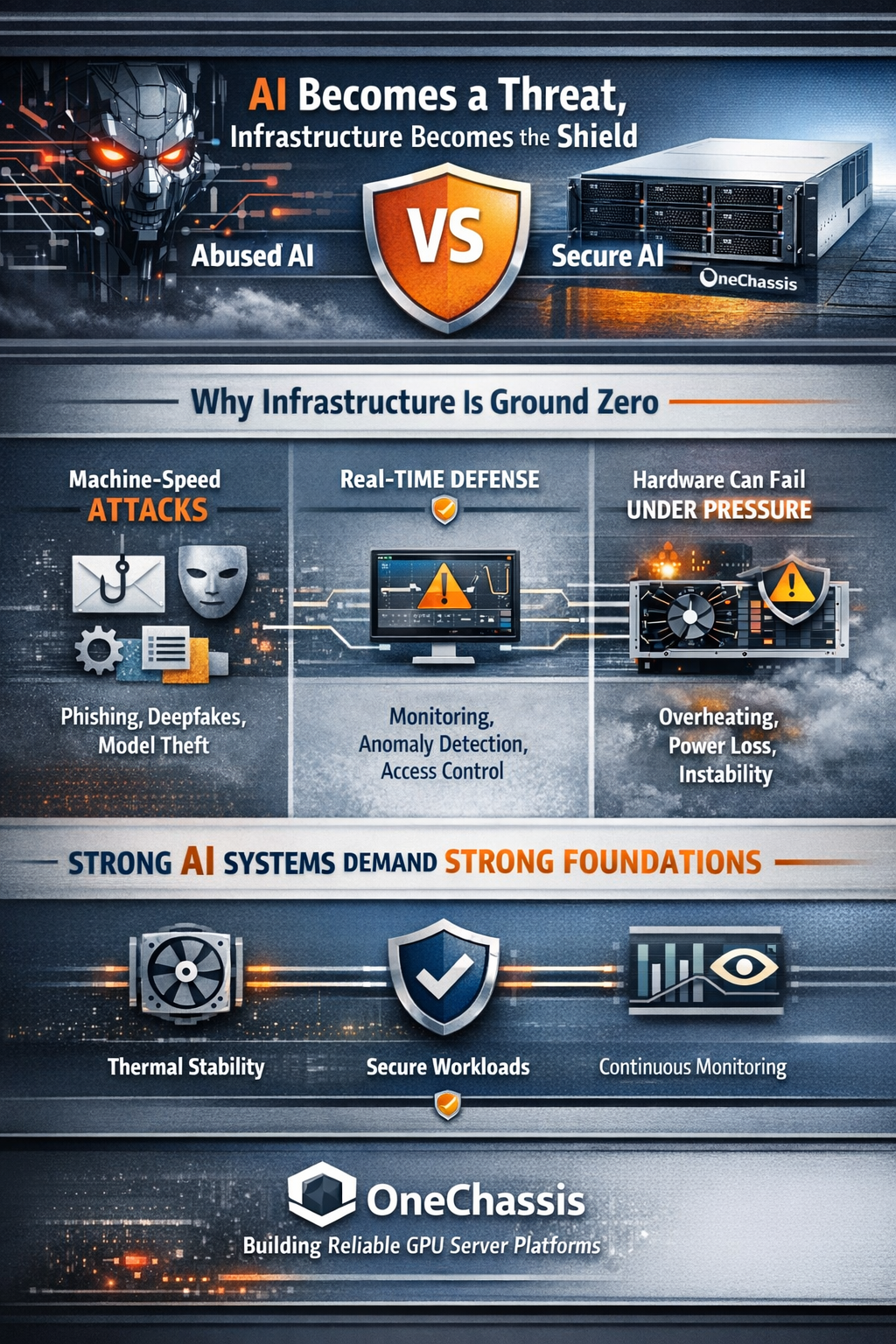 When AI Becomes A Threat, Infrastructure Becomes the Front Line
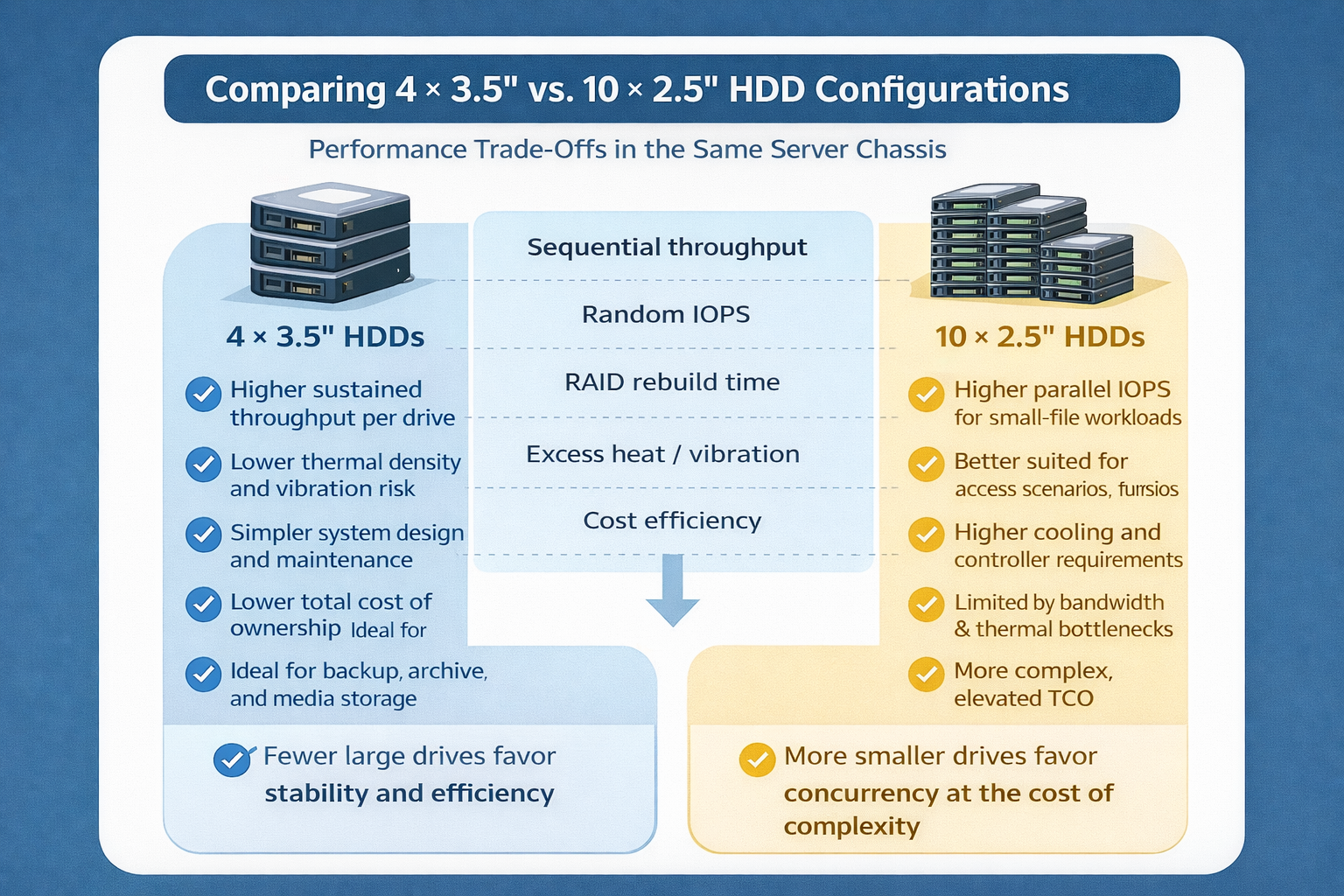 Storage Density Choices in the Same Server Chassis
 Welcoming 2026: Building the Next Year of AI Infrastructure Together
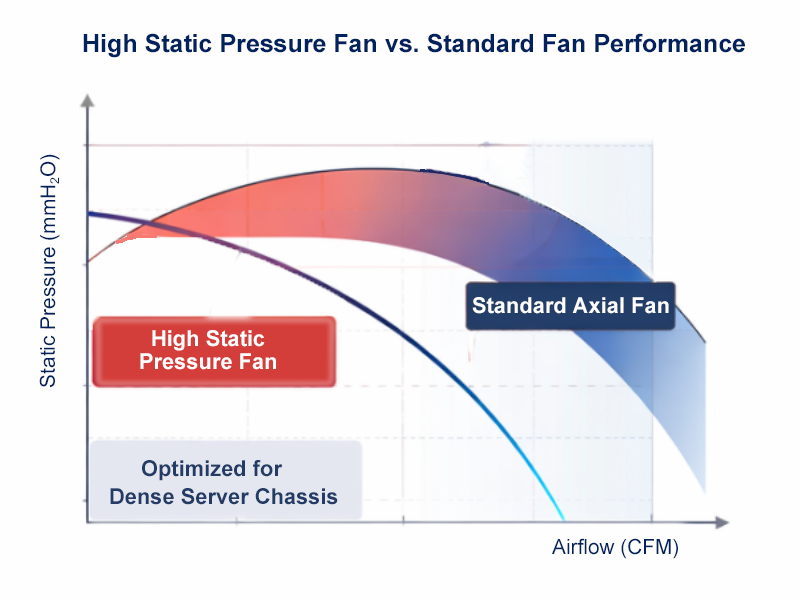 How We Design Thermal Paths: Airflow, Static Pressure & Fan Zones