When AI becomes a security risk, infrastructure becomes the front line. Learn how GPU server chassis design affects AI stability, security, and uptime—and how OneChassis builds reliable GPU platforms for enterprise AI workloads.
When building a storage server, many users focus only on total capacity or drive count. In practice, the choice between fewer 3.5″ hard drives and more 2.5″ hard drives has a much deeper impact on performance, reliability, cooling efficiency, and long-term operating cost.
As we step into 2026, the global compute landscape continues to evolve at an unprecedented pace.
AI workloads are denser. GPU clusters are larger. Expectations for stability, efficiency, and scalability are higher than ever.
In high-density GPU and AI servers, cooling isn’t an accessory — it’s infrastructure.
At OneChassis, thermal design starts at the chassis level. We engineer clear front-to-rear airflow paths to align with data-center cold-aisle / hot-aisle layouts, reducing recirculation and heat buildup under sustained load.
PU server chassis serve as the structural and thermal backbone of modern AI computing. They enable stable GPU performance through optimized airflow, high-density layouts, and enterprise-grade mechanical design. A well-engineered chassis doesn’t just hold components—it ensures sustained compute power, scalability, and long-term reliability in data centers, AI labs, and edge environments.
OneChassis provides OEM/ODM-ready GPU server enclosures from 4U to 10U, helping enterprises build systems that deliver consistent performance under real workloads.
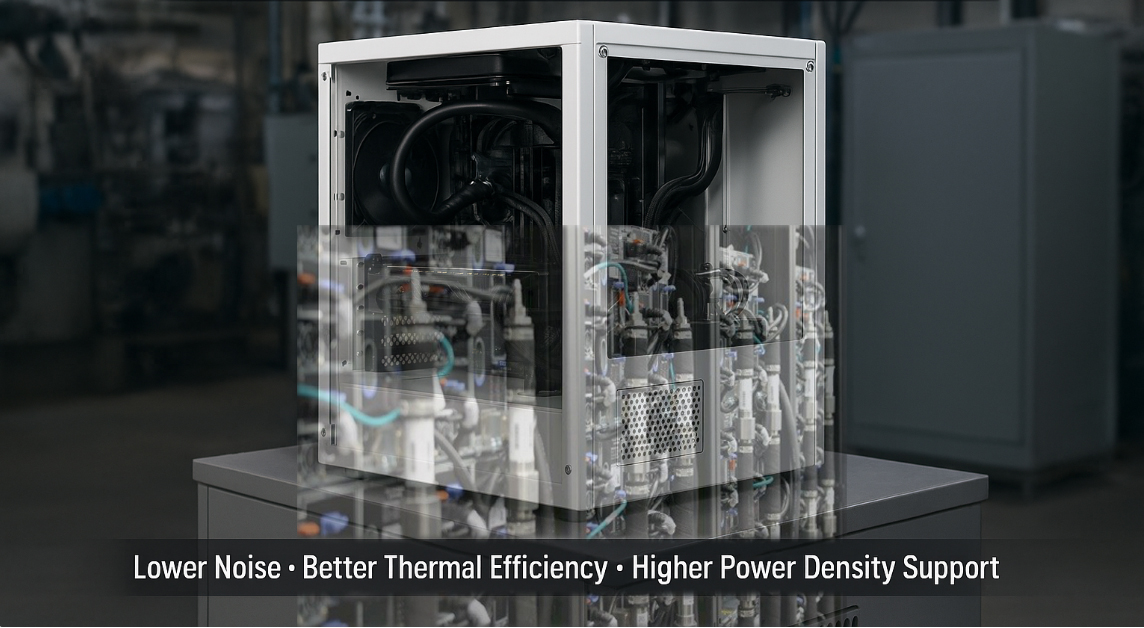
Liquid-cooled industrial chassis deliver reliable thermal performance for high-density computing in factories, edge data centers, and AI-driven automation. By using coolant instead of high-RPM fans, these systems achieve lower noise, higher heat-removal efficiency, and stable operation under continuous heavy workloads. Liquid cooling supports GPU-intensive industrial AI workloads, enhances system longevity, and enables deployment in thermally constrained or dusty environments where air cooling struggles.
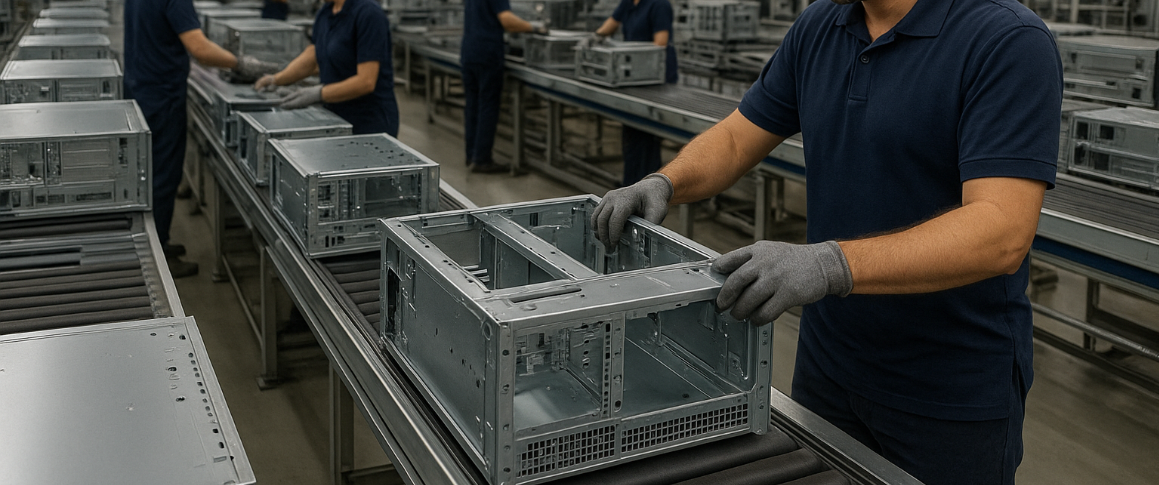
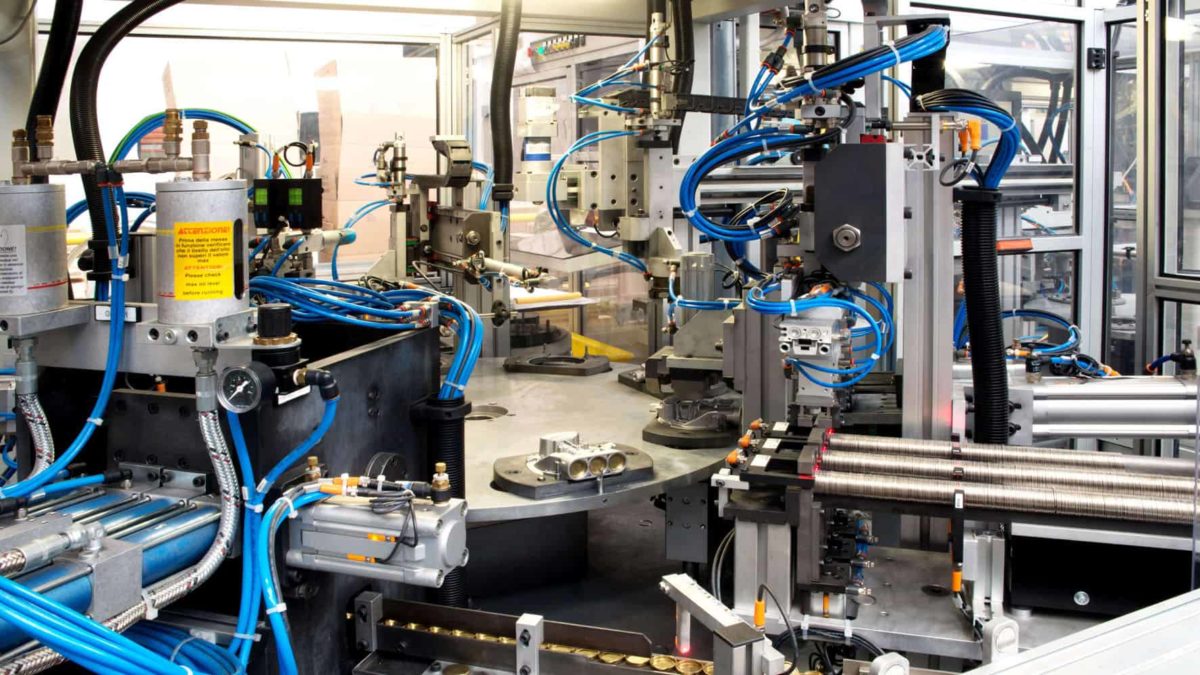
At ONECHASSIS, we believe every millimeter of metal matters. This article takes you inside our design process —from sheet metal precision to airflow simulation —showing how we turn raw steel into GPU server cases trusted by engineers worldwide. Discover how material choice, structural accuracy, and airflow design directly impact GPU stability and lifespan. See how robotic fabrication, ±0.1 mm tolerance control, and real-world thermal testing define our approach to building cases that simply work —cooler, quieter, and longer.
Why the Right Metal Matters?
At ONECHASSIS, every millimeter matters. Our GPU Server Chassis are engineered from the ground up—optimized metal structure, intelligent airflow design, and real-world testing—to deliver cooler, quieter, and longer-lasting performance for AI and HPC systems. Explore how precision engineering turns hardware stability into competitive advantage.