When AI Becomes A Threat, Infrastructure Becomes the Front Line
At OneChassis, we don’t look at AI as abstract software. We see it where it really lives — inside racks, powered by GPUs, cooled by airflow, and constrained by physical limits. And that perspective changes everything.
Today, AI models are already being misused for large-scale phishing, deepfake fraud, automated social engineering, and model extraction. These attacks don’t move at human speed. They scale instantly, run nonstop, and exploit any weakness in the system behind the model.
That’s why the real challenge is no longer if AI misuse will happen, but whether your infrastructure can handle it when it does.
Security teams are beginning to shift their mindset. AI systems can’t be treated as black boxes anymore. They need the same discipline applied to critical infrastructure: continuous monitoring of model inputs and outputs, anomaly detection inside AI pipelines, strict access control, and stress testing under real-world load. Just like networks and storage, AI needs to be tested, hardened, and operationally predictable.
This is where hardware quietly becomes a deciding factor.
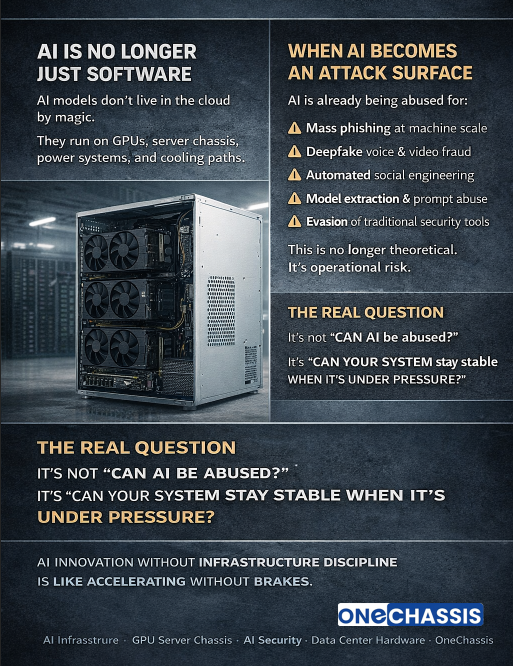
Security-focused AI workloads are intensive by nature. They run hot, run constantly, and often spike without warning. If the underlying GPU platform throttles, overheats, or becomes unstable, detection systems fail at the worst possible moment. A GPU server chassis that can’t maintain thermal balance or power stability isn’t just inefficient — it becomes a liability.
AI innovation without infrastructure discipline is like accelerating without brakes. The organizations that lead won’t just train smarter models — they’ll build stronger systems underneath them.
And when AI becomes a threat, infrastructure becomes the front line.
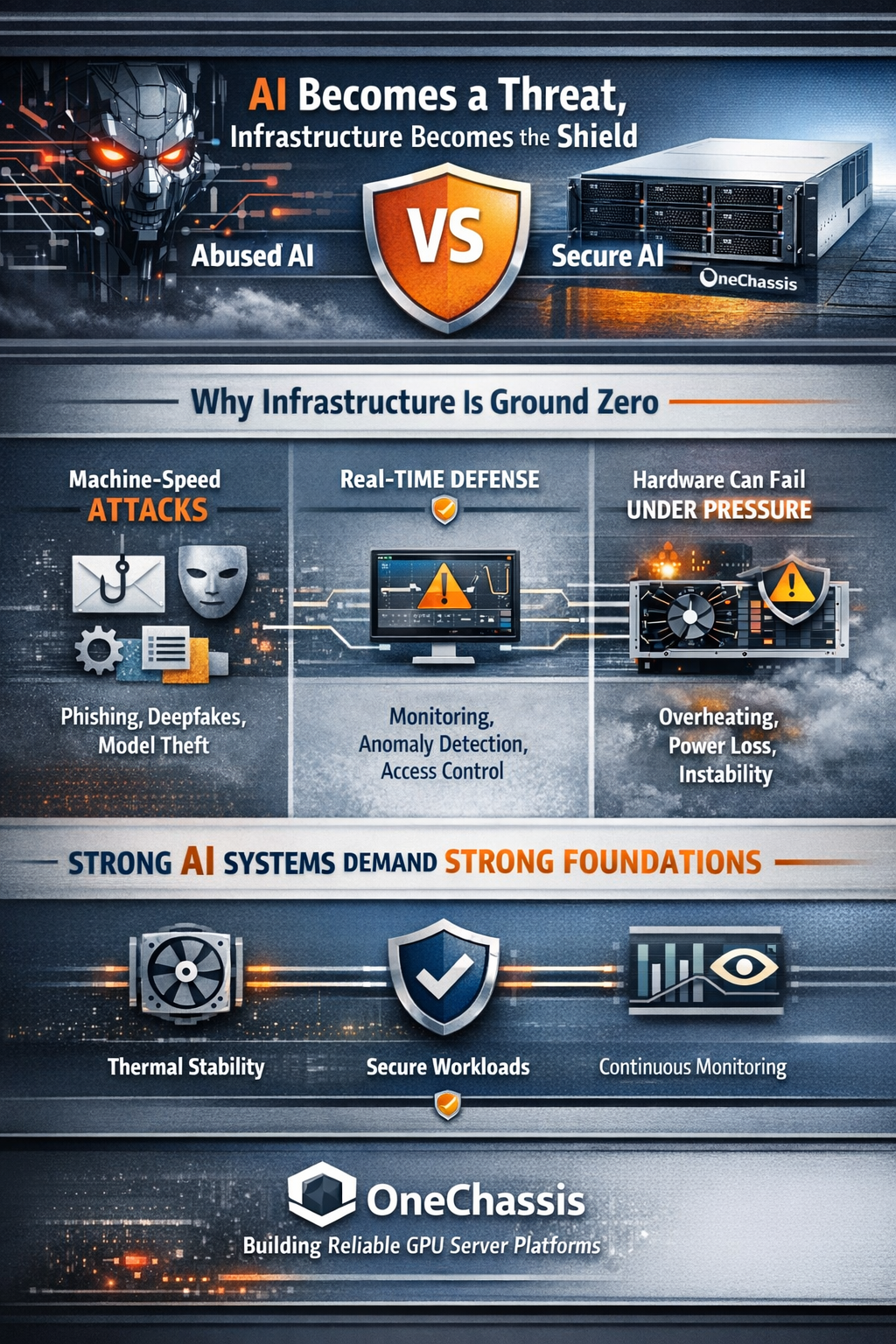 When AI Becomes A Threat, Infrastructure Becomes the Front Line
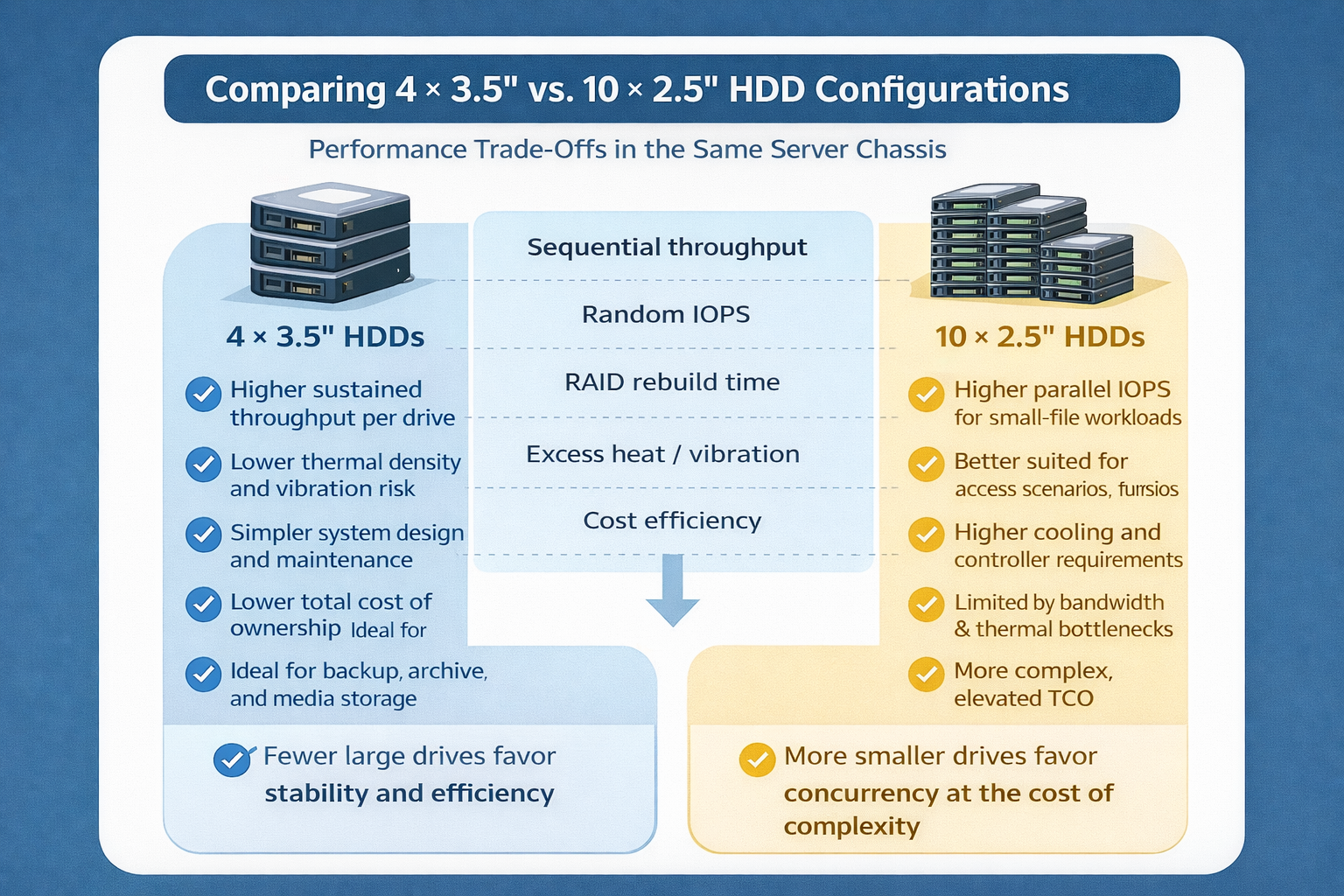 Storage Density Choices in the Same Server Chassis
 Welcoming 2026: Building the Next Year of AI Infrastructure Together
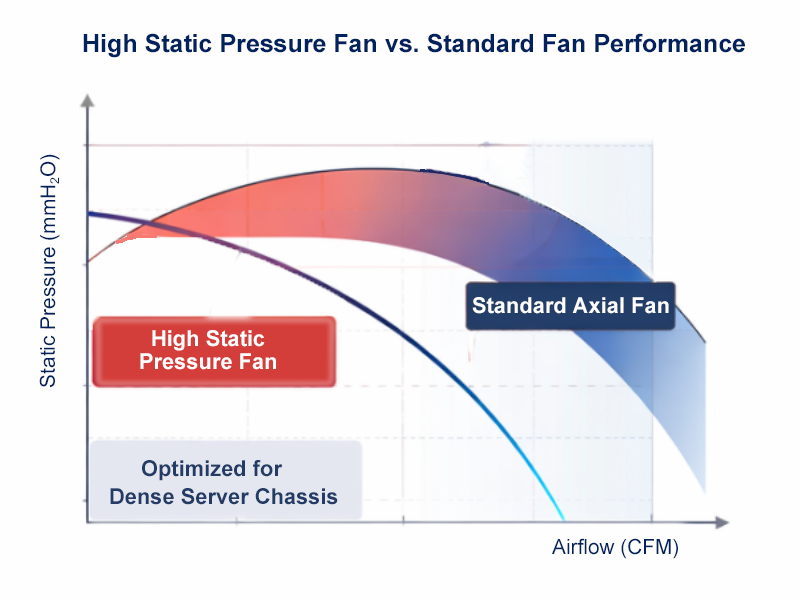 How We Design Thermal Paths: Airflow, Static Pressure & Fan Zones